

Romeo and Juliet Lesson 1
Girl Talk – Juliet Meets Rosaline
ASSIGNMENT – Write a New Scene for the play.
PREREQUISITES: READ Romeo and Juliet
LESSON OBJECTIVES: By writing and performing their own scene, students will better recognize the role dialogue and character interaction (what is said and what is suggested) play in advancing the plot. They will learn to identify character traits from speech patterns and write in-character dialogue; and they will learn how to block a scene and use vocal dynamics when performing (or reciting). To help students better understand and appreciate Shakespeare’s figurative language, they will include two metaphors, two antitheses and one pun in their scripts. To assist students in writing antitheses and metaphors, have them complete our HOW TO PEN PUNS, METAPHORS, AND ANTITHESES online lesson and see the NEXUS chapter “Word Games” in Romeo and Juliet and the Renaissance; in particular read the opening section on “Pun Ping Pong” and the section “Word Bridges.”
MATERIALS: Word Processor (Word or Pages), pen, notebook, props, costumes, and music of your choice, a copy of Romeo and Juliet, a recording device
TASK: Add a scene in which Juliet and Rosaline meet and discuss Romeo. Place the new scene between Act II Scene 2 and Scene 3; call it Scene 2.5 – THE MORNING AFTER CAPULET’S FEAST. Write the dialogue either in Shakespearean English or contemporary English.
VOCABULARY: blocking, berate, revile, indignation, mollify, recount, humors, sanguine, phlegmatic, yellow bile, aristocracy, opulent, decor, cronies, modulate
COMMON CORE STANDARDS MET WITH THIS LESSON:
CCSS.ELA-LITERACY.RL.9-10.3
Analyze how complex characters (e.g., those with multiple or conflicting motivations) develop over the course of a text, interact with other characters, and advance the plot or develop the theme.
CCSS.ELA-LITERACY.RL.9-10.4
Determine the meaning of words and phrases as they are used in the text, including figurative and connotative meanings; analyze the cumulative impact of specific word choices on meaning and tone (e.g., how the language evokes a sense of time and place; how it sets a formal or informal tone).
Image Courtesy of Folger Shakespeare Library
Writing Your Own Scene
STEPS:
- Pair off with another member of your class,
- Choose who will play Juliet and who will play Rosaline.
- Then collaboratively plan and write your scene following the guidelines below.
- After the scene is written, you must memorize your lines and rehearse them multiple times.
- Both members of the team will collaboratively select costumes, props, and musical background and co-direct the performance.
- After writing and rehearsing your scene, in a two or three-paragraph essay, discuss how Juliet’s interaction with Rosaline showcases aspects of Juliet’s character and how the conversation between the two young women could affect the plot of the play (if your scene were actually incorporated into a production of Romeo and Juliet).
- Critique another team’s scene.
SCENE:
- Juliet will meet her cousin Rosaline and discuss the previous night’s party.
- MAKE SURE JULIET STAYS TRUE TO CHARACTER IN YOUR SCENE.
- You will choose the setting.
- Write the dialogue either in Shakespearean English or contemporary English.
- For either approach, your script must include a minimum of two Shakespearean-style antitheses, one pun, and two metaphors (you may use similes and personifications as special types of metaphors).
Scenario
The morning after the Capulet party, Juliet and her cousin Rosaline meet and discuss the previous night’s festivities. Rosaline brings up the party crasher Romeo.
ASK YOURSELF THE FOLLOWING QUESTIONS AS YOU PLAN YOUR SCENE.
-
- Will Rosaline show surprise that Romeo, who Rosaline believes still loves her, didn’t ask her to dance or attempt to talk to her?
- Will she apologize to Juliet because she knows Romeo crashed the party because of her?
- Will she, like the fiery Tybalt, berate the family’s enemy for intruding on their party and hiding behind a mask?
- YOU DECIDE. THEN YOU MUST DETERMINE HOW JULIET WILL RESPOND. OBVIOUSLY SHE MUST CONCEAL HER FEELINGS FOR ROMEO. HOW WILL SHE DO IT?
- For example, if Rosaline reviles Romeo, will Juliet defend him or agree with Rosaline to hide her love for him? Or will Juliet pretend to share in Rosaline’s indignation while simultaneously attempting to soften (mollify) it, saying it’s time the family feud and all the bloodshed ended?
- If the feud is ultimately about power and money, how might Rosaline’s argument imply this? (For more on this topic see “Italian Family Feuds” in Romeo and Juliet and the Renaissance, NEXUS.
- Perhaps Rosaline saw Juliet and Romeo together during the party. If so and Rosaline recounts what she witnessed, how will Juliet play down her feelings for Romeo?
- Will Rosaline suddenly become interested in Romeo now that he’s shifted his affection to her cousin?
- Does Rosaline know that Tybalt has challenged Romeo to a duel? If so, will she share this information with Juliet? If she does, how will Juliet react?
- If Juliet knew about the challenge, what steps might she take to protect both her beloved and her cousin Tybalt?
DIALOGUE LESSON: Giving Rosaline a Voice
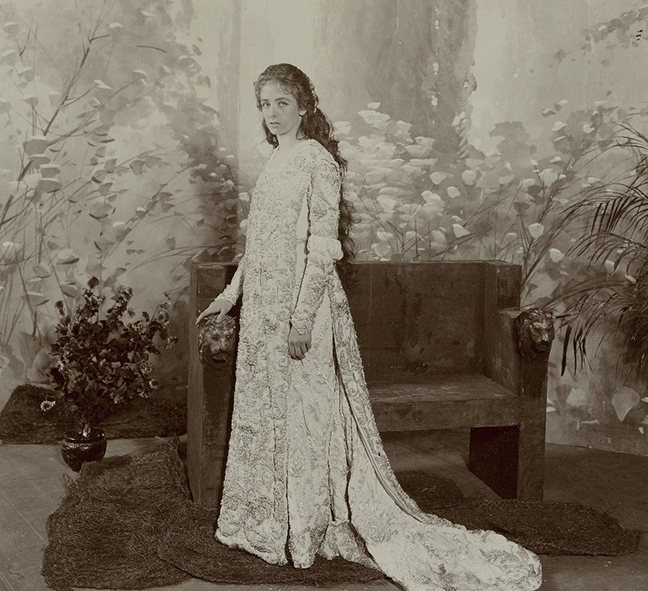
MODERN ENGLISH OR SHAKESPEARE’S ENGLISH?
- How will Rosaline speak? In long sentences or short? Will she talk more about herself or others? Does Rosaline speak quickly or slowly? Is she loud or soft-spoken?
- In terms of the four “humors,” is she phlegmatic or sanguine? Or is Rosaline, like the fiery Tybalt, driven by a dominant yellow bile humor?
- What language habits does she have? Does she borrow the words of the person with whom she’s conversing rather than thinking of her own words? Does Rosaline mumble? Is she well-educated like Juliet? If so, how will her choice of words show her education?
- If Rosaline were living in this millennium would she speak like an average high school girl or a college graduate?
- How can you show that she is a member of the elite, the Italian aristocracy, while using modern English? Would she have a first-rate vocabulary or, like most women of her era, would she have been prevented from attending school?
- Would she punctuate every sentence with “like,” averaging 20 or more “likes” per minute like many teenagers today? Or is she too self-confident and well-educated to use “like” as a punctuation mark or filler?
- Should the range of adjectives Rosaline employs be broad or narrow? For example, today many people use “amazing” to describe everything that’s extremely positive: Her outfit was amazing! The food was amazing! The movie was amazing! Johnny Depp is amazing! Would Rosaline do this? Or would she use more variety in her choice of words? For example, if she were describing the party to Juliet would she be likely to say: “The party was thrilling, the décor gorgeous and opulent, the music exciting and seductive, but the cuisine, although wholesome was unimaginative.” Or would she simply say, “It was an amazing party!” “The décor, the food, the music, everything was simply amazing until you-know-who popped in with his masked cronies. What nerve. That Montague boy would do anything to get near me!”
- What distinguishes Juliet’s language habits from Rosaline’s? Is Juliet better educated? Is Juliet more dynamic? More emotional or more rational? Less or more intelligent? More open-minded or less?
- Juliet obviously has courage. How might she show her courage in her exchanges with Rosaline?
- Also, remember, Juliet must hide her love for Romeo. To help you see how she might do that, reread the scene in which Juliet encounters Paris at Friar Lawrence’s cell (Act IV, scene 1). In this scene Juliet chooses words that mean one thing to her and something else to Paris.
EVERYONE TALKS A LITTLE DIFFERENTLY. DON’T MAKE JULIET AND ROSALINE SPEAK AS IF THEY WERE THE SAME PERSON.
Decide in advance what distinguishes Juliet’s language habits from Rosaline’s? For example, some people have favorite expressions that they frequently use. Often these phrases reveal things about the speaker’s character, his or her educational background,social position, age, interests, etc. Make several tests by having each young woman say the same thing in different ways. Which way seems most in character? Which way is the most interesting and dramatic?
Brief Blocking Lesson
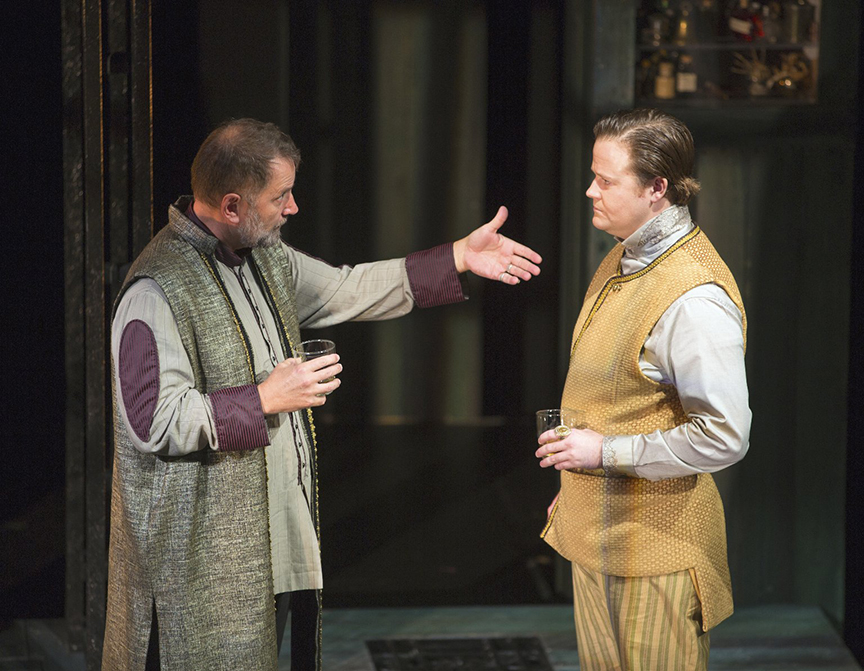
BLOCKING a scene means positioning the actors. The director must determine in advance where each character will stand or sit in relation to the other character(s) and where and how she or he will move.
MOVEMENT should help convey each character’s mood and feelings. For example, Juliet might look down or away when Romeo’s name is first mentioned by Rosaline.
POSITIONING can help show the relationship between characters: a person in charge might sit while the other character stands. In the above scene, Lord Capulet speaks with Paris about Juliet. Describe the body language that shows who is in charge. When positioning characters, the director must also make sure that the audience can clearly see the actors.
Also remember that directors show actors at their most dramatic angles to intensify dramatic moments in a play or film.
Mini Lesson in Vocal Dynamics

VOCAL DYNAMICS refers to the changing of one’s pitch, volume and speed when speaking.
To make a scene seem natural, you must include vocal dynamics:
RAISING THE VOICE in anger or to get someone to focus on the point being made.
LOWERING THE VOICE so no one else overhears something controversial, dangerous, or compromising that the character might say.
SPEEDING UP (to show excitement or frustration) or slowing down a sentence.
>PAUSING to emphasize a point and let it sink in – don’t ever say THAT….again.” Or pausing simply to let your thoughts catch up to your mouth.
We do ALL these things naturally, usually without thinking about them in conversation. Unfortunately, when reading or reciting dialogue, non-actors tend to leave out natural vocal dynamics. BE SURE TO INCLUDE THEM so your scene doesn’t sound flat and unnatural. In real life, no one speaks consistently at one volume and one tempo. Our voices modulate according to our moods and emotions. You might also include sounds like “hmmm,” “ah-ha,” laughs, chuckles, snickers, groans, etc.
To indicate vocal dynamics, we ask you to borrow the dynamics symbols of music:
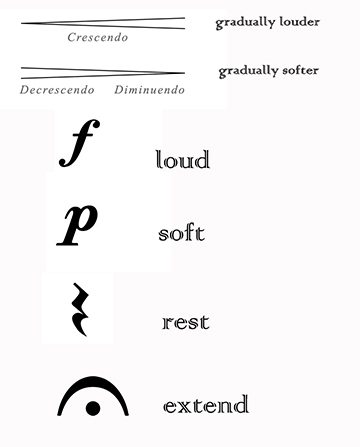
PRACTICE USING DYNAMICS SYMBOLS:
-
- >
- Listen to a short conversation or record one on TV, if possible an interview. Then transcribe the text and add the above symbols in the appropriate places.
- Similarly, notate the vocal dynamics of Lord Capulet’s dispute with Tybalt at the party in Act I, Scene 5. You may use a film version of the play to help you or simply copy the text and place the symbols where you think they belong.
- Now you are ready to incorporate vocal dynamics into your script. Thoughtfully place the vocal dynamics symbols in your text, then practice using them. REMEMBER: You are NOT RECITING lines, you are putting life into them. But don’t overdo it (i.e., don’t overact).
RECORD SEVERAL REHEARSALS, THEN LISTEN CAREFULLY TO THE RECORDINGS TO DISCOVER WHERE YOU CAN IMPROVE THE SCRIPT, ACTING and VOCAL DYNAMICS.
PLAYWRIGHT AND TEACHER JEAN-CLAUDE VAN ITALLIE says that “It is commonly said that for any scene or play to be dramatic the characters must be in conflict. Conflict in a play has been called ‘the magic essential.’” What is the “MAGIC ESSENTIAL” in your Juliet/Rosaline scene?
Theater Critic
Learning from Reviewing and from Reviews
PART II
EACH STUDENT SHOULD CRITIQUE SOME OR ALL OF HER CLASSMATES’ SCENES USING THE FOLLOWING CRITERIA:
A) How convincing and interesting is the dialogue?
B) If the dialogue is written in the style of Shakespeare, why is or isn’t it effective and well done?
C) If the dialogue is written in contemporary English, why is or isn’t it effective?
D) Are the characters true to Shakespeare’s creations? If not, how do they differ?
E) How convincing is the acting?
F) Is the blocking natural? Does it help to convey each character’s feelings?
G) Did both actors use vocal dynamics? If so, were the vocal dynamics realistic?
H) Does the scene have a “magical essential”?
I) Offer suggestions for improvement.
NEXUS – PALLAS COMMUNICATIONS, INC.
© 2018 All Rights Reserved