

Romeo and Juliet Lesson 6
Eye Themes (Love at First Sight-Love is Blind)
PREREQUISITES: READ Acts I & II in Romeo and Juliet
OBJECTIVES: Recognize and interpret themes (repeated motifs) in the play. Learn to examine a theme from multiple perspectives and be able to explain how particular passages help develop one or more of these perspectives. Improve close-reading skills.
MATERIALS: Internet access, word processor (or pen and notebook), copy of Romeo and Juliet
TASK: Interpret passages that reflect themes in Romeo and Juliet
VOCABULARY: Tyrannous, rank, devout, transparent, heretic, forswear, lineament, content, obscured, margent, allude
COMMON CORE STANDARDS MET WITH THIS LESSON:
CCSS.ELA-LITERACY.RL.9-10.1
Cite strong and thorough textual evidence to support analysis of what the text says explicitly as well as inferences drawn from the text.
CCSS.ELA-LITERACY.RL.9-10.2
Determine a theme or central idea of a text and analyze in detail its development over the course of the text, including how it emerges and is shaped and refined by specific details; provide an objective summary of the text.
CCSS.ELA-LITERACY.RL.9-10.3
Analyze how complex characters (e.g., those with multiple or conflicting motivations) develop over the course of a text, interact with other characters, and advance the plot or develop the theme.
CCSS.ELA-LITERACY.RL.9-10.4
Determine the meaning of words and phrases as they are used in the text, including figurative and connotative meanings; analyze the cumulative impact of specific word choices on meaning and tone (e.g., how the language evokes a sense of time and place; how it sets a formal or informal tone).
Love is Blind
-
- For this Romeo and Juliet lesson you will EXPLAIN passages from Acts I and II in terms of either (or both) of the EYE THEMES in Romeo and Juliet: Love is Blind and Love at First Sight.
- FIND AND EXPLAIN four other expressions of these themes in the play.
- IN AN ESSAY, EXPLAIN the relationship between the two themes, responding to at least three of the questions below. Also, you should use three or more of the quotes in this lesson (see passages below) to support your arguments.
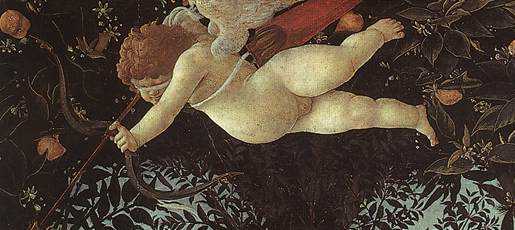
- Why do you think Cupid is depicted as blind, and why he is represented as a child rather than a mature man?
- Does falling in love at first sight blind lovers to each other’s faults? For example, Romeo and Juliet fall instantly in love and die for one another, but how well do they know each other? Do they see each other’s faults or do they assume the other is perfect?
- Is love permanently or temporarily blind?
- Does love help us to peer deeper into people? For example, Juliet’s love enables her to see beyond the label “Montague” to the real person, while the other Capulets fail to recognize Romeo as a fellow human being; they only see an enemy, a Montague. Is love blind in this case or more clear-sighted? Why?
BENVOLIO:
Alas, that love, so gentle in his view,
Should be so tyrannous and rough in proof.
ROMEO:
Alas, that love, whose view is muffled still
Should without eyes see pathways to his will.
1) IDENTIFY THE CONTRAST(S) IN BENVOLIO'S STATEMENT and EXPLAIN THE TWO ASPECTS OF LOVE THAT HE COMPARES. EXPLAIN THE IRONY IN ROMEO'S REPLY.
ROMEO:
In that hit you miss. She'll not be hit
With Cupid's arrow. She hath Dian's wit.
2) EXPLAIN THE IRONY IN ROMEO'S STATEMENT "In that hit you miss." HOW DOES "DIAN'S WIT" HELP ROSALINE EVADE CUPID'S ARROWS? (NOTE: The line numbers may not correspond exactly to those in your edition of the play.)
JULIET:
By whose direction found'st thou out this place?
ROMEO:
By love, that first did prompt me to inquire.
He lent me counsel, and I lent him eyes.
3) EXPLAIN ROMEO'S RESPONSE IN TERMS OF THE EYE THEMES.
Love at First Sight
ROMEO:
Oh, teach me how I should forget to think?
BENVOLIO:
By giving liberty unto thine eyes.
Examine other beauties.
4) WHY DOES ROMEO WANT TO "forget to think"? IS BENVOLIO'S SOLUTION HELPFUL? DOES IT REFLECT EITHER OF THE PLAY'S EYE THEMES? IF SO, HOW?
___________________________________________________________
ROMEO:
These happy masks that kiss fair ladies' brows,
Being black, puts us in mind they hide the fair.
He that is strucken blind cannot forget
The precious treasure of his eyesight lost.
Show me a mistress that is passing fair:
What doth her beauty serve but as a note
Where I may read who passed that passing fair?
5) EXPLAIN THE ABOVE LINES IN TERMS OF THE EYE THEMES.
_____________________________________________________________
BENVOLIO:
Take thou some new infection to thy eye
and the rank poison of the old will die.
6) IN THE ABOVE LINES, WHY DOES BENVOLIO CALL LOVE AN INFECTION OF THE EYE? IS HE RIGHT? CAN LOVE FEEL LIKE AN INFECTION OR SICKNESS? HOW DOES BENVOLIO RECOMMEND CURING THIS INFECTION? DO YOU THINK BENVOLIO GIVES ROMEO SOUND ADVICE? EXPLAIN YOUR ANSWER. CAN YOU THINK OF ANOTHER CURE? IF SO, EXPLAIN IT.
_____________________________________________________________
BENVOLIO:
Go thither [to Capulet's party] and with unattainted eye
Compare her face with some that I shall show
And I will make thee think thy swan a crow.
ROMEO:
When the devout religion of mine eye
Maintains such falsehood, then turn tears to fires;
And these who, often drowned, could never die,
Transparent heretics, be burnt for liars.
One fairer than my love? The all-seeing sun
Ne'er saw her match since first the world begun.
7) WHAT IS AN "unattainted eye"? WHAT EYE THEMES DO BENVOLIO'S WORDS IMPLY? WHY DOES ROMEO CALL HIS LOVE FOR A WOMAN A RELIGION? WHO IS THE GOD OF ROMEO'S "religion" IN THIS METAPHOR, ROSALINE OR CUPID? EXPLAIN YOUR ANSWER. EXPLAIN THE DOUBLE MEANING OF "transparent heretics." WHAT IS ROMEO ALLUDING TO WHEN HE SAYS "transparent heretics, be burnt for liars"?
_____________________________________________________________
ROMEO:
Did my heart love till now? Forswear it, sight!
For I ne'er saw true beauty till this night.
FRIAR LAWRENCE:
Young men's love, then, lies
not truly in their hearts, but in their eyes.
8) WHAT IS THE CONNECTION BETWEEN ROMEO'S STATEMENT IN ACT I AND FRIAR LAWRENCE'S OBSERVATION IN ACT II? IS THERE A POSSIBLE DOUBLE MEANING IN THE LINE "Young men's love, then, lies"?
_____________________________________________________________
JULIET:
I'll look to like, if looking liking move
But no more deep will I endart mine eye
Than your consent gives strength to make it fly.
9) CONTRAST JULIET'S STATEMENT "I'll look to like, if looking liking move" WITH ROMEO'S STATEMENT IN QUESTION 8? WHY IS THE WORD "endart" FITTING IN THIS LINE?
_____________________________________________________________
LADY CAPULET:
What say you? Can you love the gentleman?
This night you shall behold him at our feast.
Read o'er the volume of young Paris' face,
And find delight writ there with beauty's pen;
Examine every married lineament,
And see how one another lends content;
And what obscured in this fair volume lies
Find written in the margent of his eyes.
This precious book of love, this unbound lover
To beautify him only lacks a cover.
10) DOES LADY CAPULET'S ADVICE TO HER DAUGHTER REFLECT EITHER OF THE EYE THEMES IN THE PLAY? WHAT DOES LADY CAPULET MEAN BY "married lineament"? WHY DOES SHE USE THE WORD "married" here? HOW DO PARIS'S LINEAMENTS lend one another content? LOOK UP THE WORDS "obscure" and "margent" THEN EXPLAIN THE LINES IN WHICH THOSE WORDS APPEAR.
EXTRA CREDIT: EXPLAIN THE LAST TWO LINES IN THE ABOVE QUOTE. [HINT: TO FULLY EXPLICATE THESE LINES, YOU WILL NEED TO DO SOME RESEARCH ON THE PRINTING BUSINESS IN SHAKESPEARE'S TIME.]
NEXUS – PALLAS COMMUNICATIONS, INC.
© 2018 All Rights Reserved